Origin
From bark to quill, how Ceylon cinnamon is peeled and rolled
Cinnamon is one of the very few spices in world trade that has resisted mechanisation completely. No machine has been built that can lift the inner bark from a cinnamon shoot without tearing it. The work is done by hand, by people who train for years, and it is done within hours of the shoot being cut. Everything downstream, every grade code and every price on a specification sheet, depends on that hour.
Before sunrise
Cutting starts early, while the air is still damp and the bark is loose against the wood. The peeler selects shoots of roughly two to three years of growth, straight, about as thick as a thumb. Older wood gives thick bark and a coarse grade. Younger wood gives too little to work with. The judgement is made by eye and by hand in about two seconds per shoot.
The cut shoots are carried to a shaded work area, never left in direct sun. From this point the clock matters. Bark that dries on the stick cannot be lifted cleanly.
Rubbing and scoring
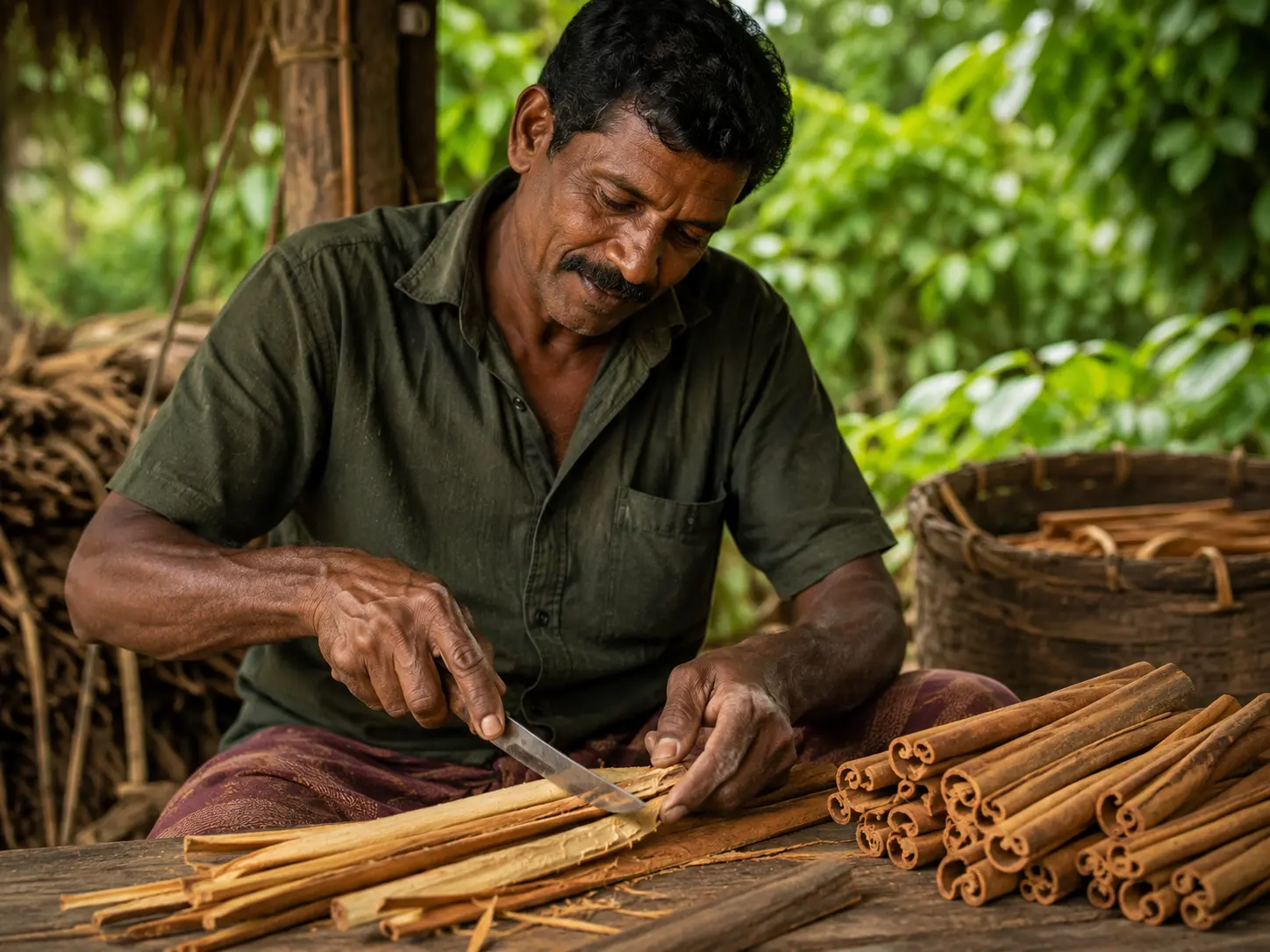
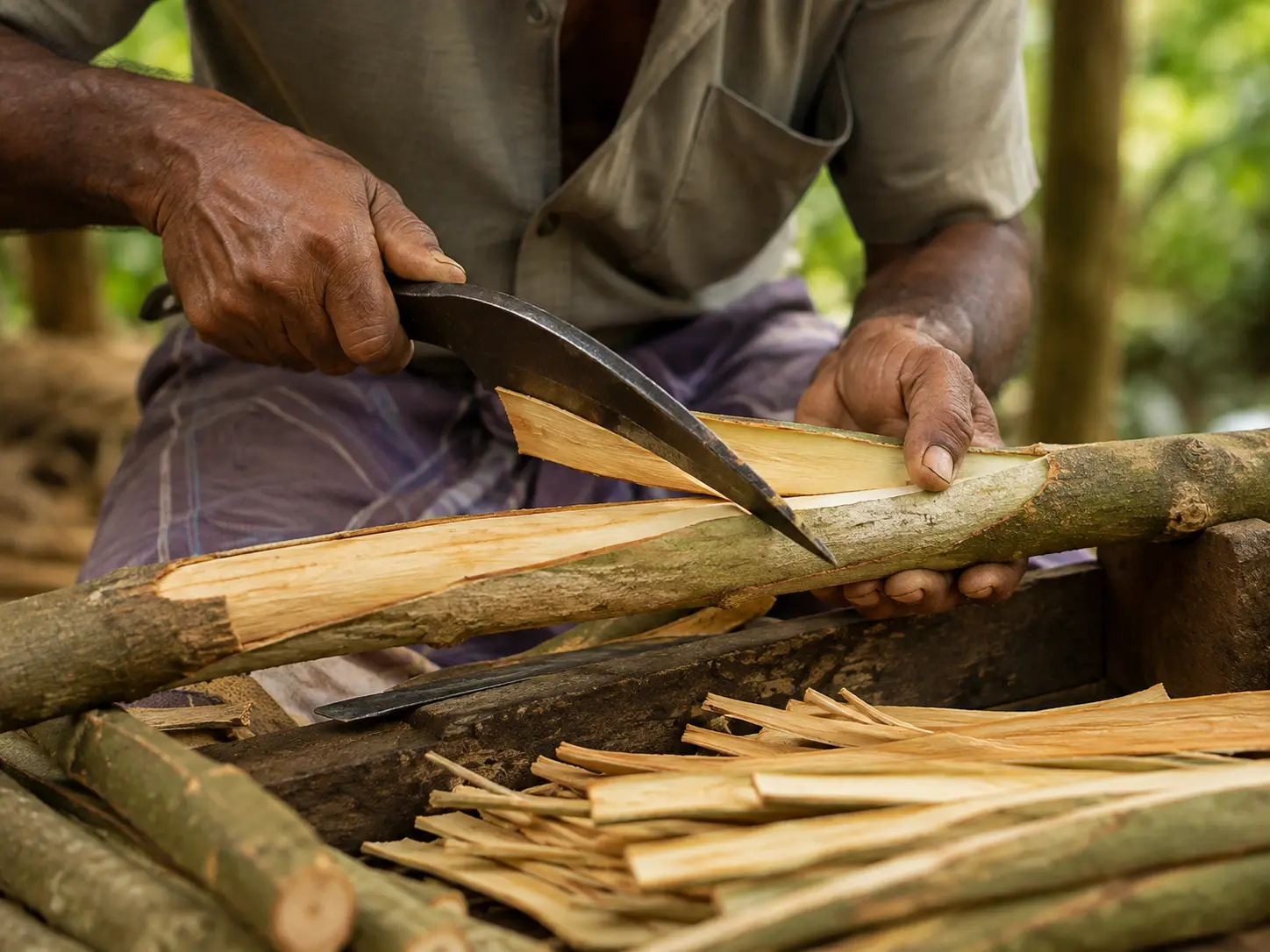
The outer bark is scraped away with a curved blade, then the stick is rubbed hard with a brass rod. Brass, not steel, because it does not stain the bark. The rubbing loosens the inner bark from the wood beneath it, and you can hear when it has worked. The note changes from a dull scrape to a soft hollow sound.
Then the peeler scores two long lines down the length of the stick and works the knife under the edge. If the rubbing was done properly, the inner bark comes away in two complete half tubes. If it was rushed, it tears, and a torn strip drops the whole piece to a lower grade.
Rolling
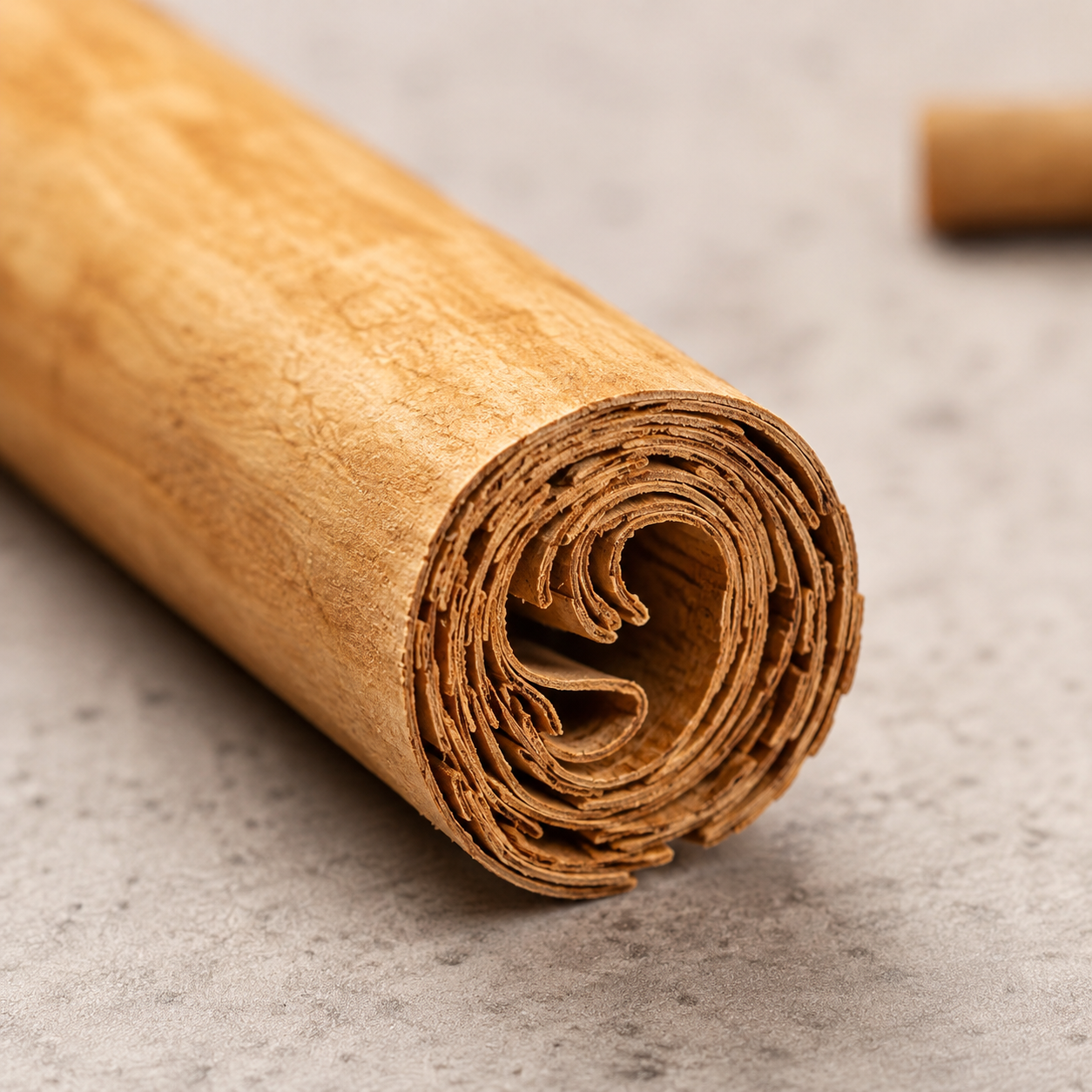
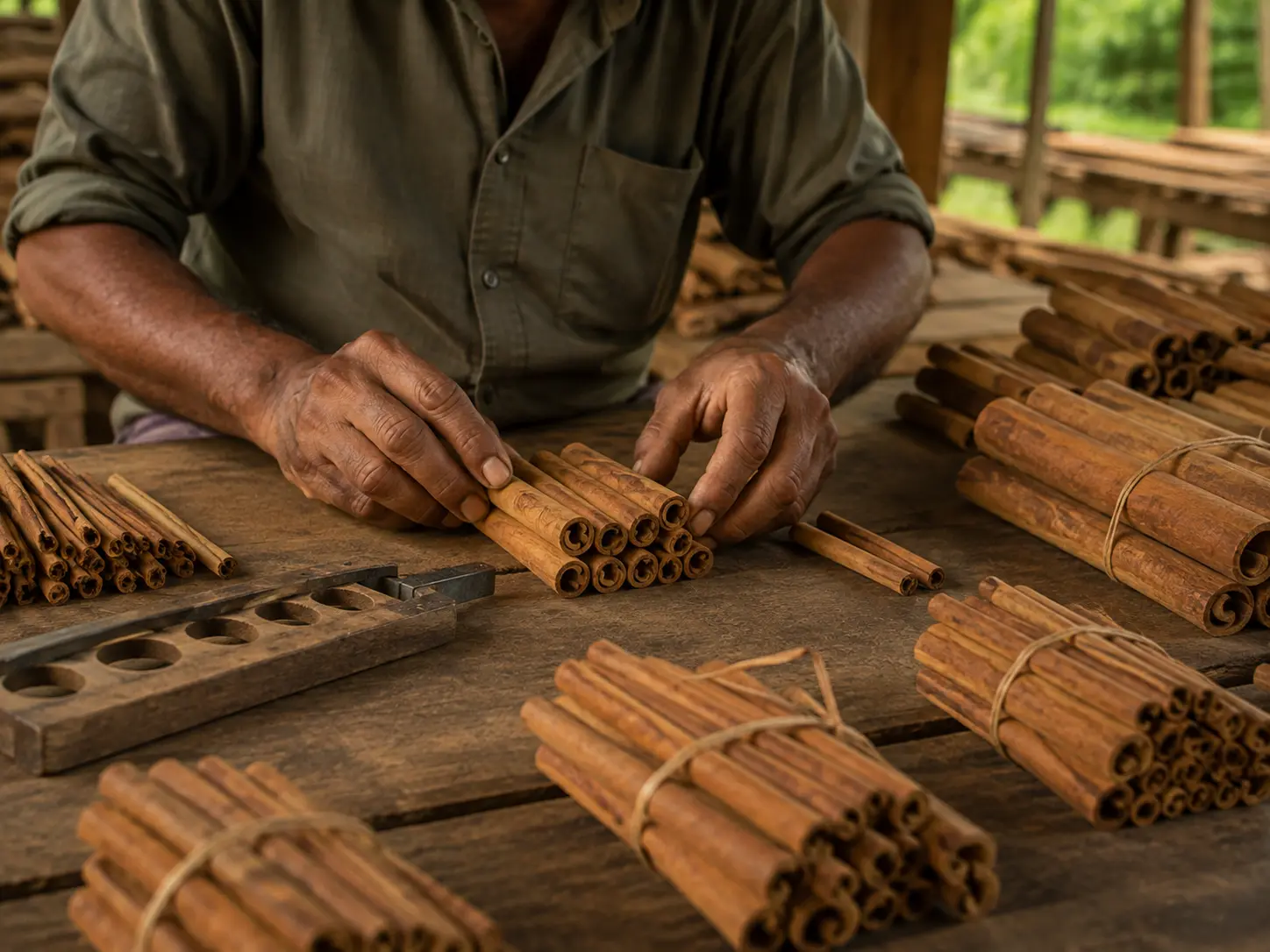
The strips are laid one inside another, smallest inside largest, and rolled into a pipe. Offcuts and shorter pieces are packed into the hollow centre, which is why a Ceylon quill is a bundle of many layers rather than one curl. Done well the finished tube is even along its whole length and holds together with no binding at all.
The thinner and more even the strip, the tighter the roll, and the smaller the finished diameter. That diameter is the grade, and the grade is the price.
A skilled peeler works with the economy of someone who has done a thing tens of thousands of times. There is no hesitation and very little waste. Watching it, the striking thing is not the speed but the quiet. It is close, precise work and the room is almost silent.
Drying
The rolled quills go onto racks, first in shade for a day so they contract evenly, then into the sun. Sun drying takes several days depending on the weather, and the quills are turned by hand and rolled tighter as they shrink. Rain during the drying period is the single largest risk in the season, which is why racks are built to be moved under cover in minutes.
Dried too fast and the quill splits. Dried too slowly and it darkens and can spot. Correctly done, the bark comes off the rack pale, light, and hard enough to travel, and the aroma is at its peak in the first weeks after drying.
Cutting and grading
Only at the end are the quills cut to length and sorted, and the sorting is again done by hand and by eye, gauge in hand. Alba, C5 Special, C4, H1. Broken pieces become quillings. Nothing is thrown away. The scrapings and the twig bark go for oil distillation.
When people ask why true cinnamon costs several times what cassia costs, this is the answer, and it is not romantic. It is a day of skilled manual work per bundle, performed by a shrinking number of people who can do it well. Paying properly for that work is the only way the craft survives another generation.