Skip to content

Free worldwide shipping over $75

Singha Foods

Estate to pouch

Sourcing and quality

How the bark is grown, peeled, dried, graded and checked, and who does the work.
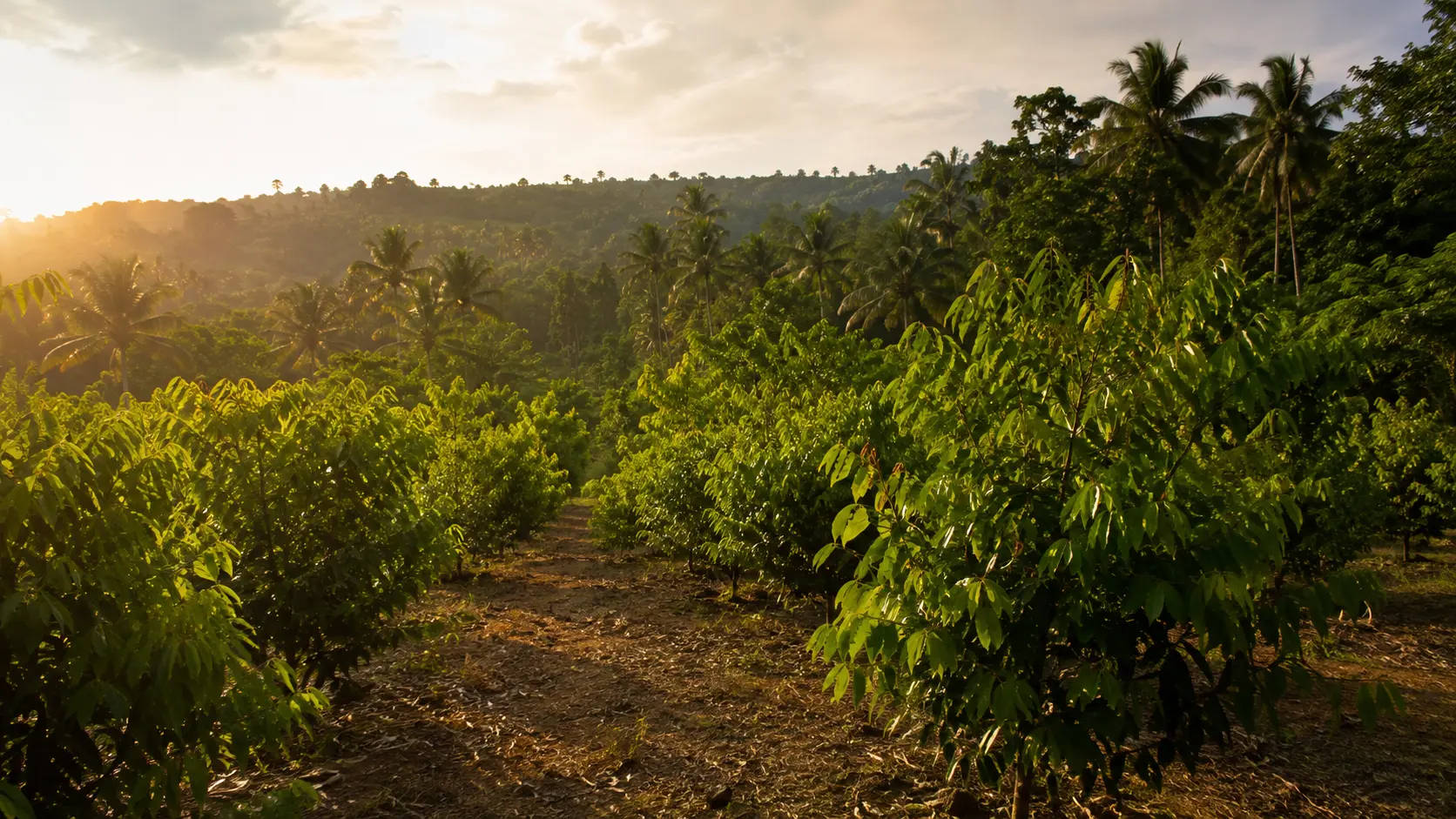
Green cinnamon growing country beside the sea

The growing belt

Terroir, in the literal sense.
Our cinnamon comes from the coastal belt of the Southern Province, where light sandy soil, steady humidity and salt air combine to produce inner bark that is fine and even enough to roll by hand.

Growers there work small plots on a continuous cycle rather than a single annual harvest, cutting shoots as they reach the right thickness. Peak activity runs from May to September, but bark comes off the land all year.

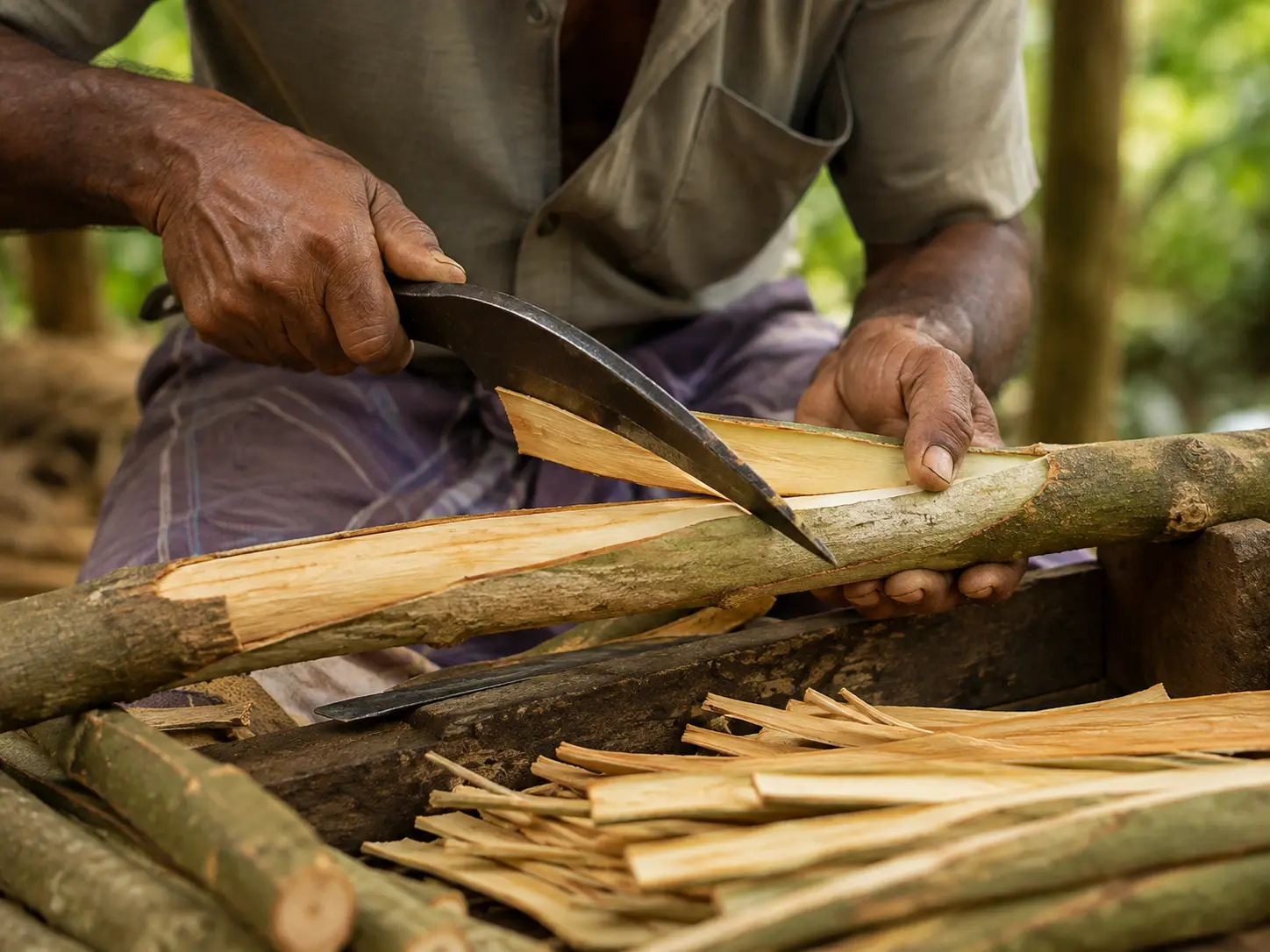
A peeler lifting cinnamon bark with a curved knife

Harvesting

The peelers' craft.

Shoots are cut early in the morning and worked in the shade within hours, while the bark is still loose against the wood. The outer bark is scraped away and the stick is rubbed with a brass rod, never steel, so the bark is not stained.

The inner bark is then scored and lifted in two long sheets. This step has never been mechanised. A clean lift gives a fine quill, a torn lift drops the piece to a lower grade, and the difference is entirely in the hands of the peeler.

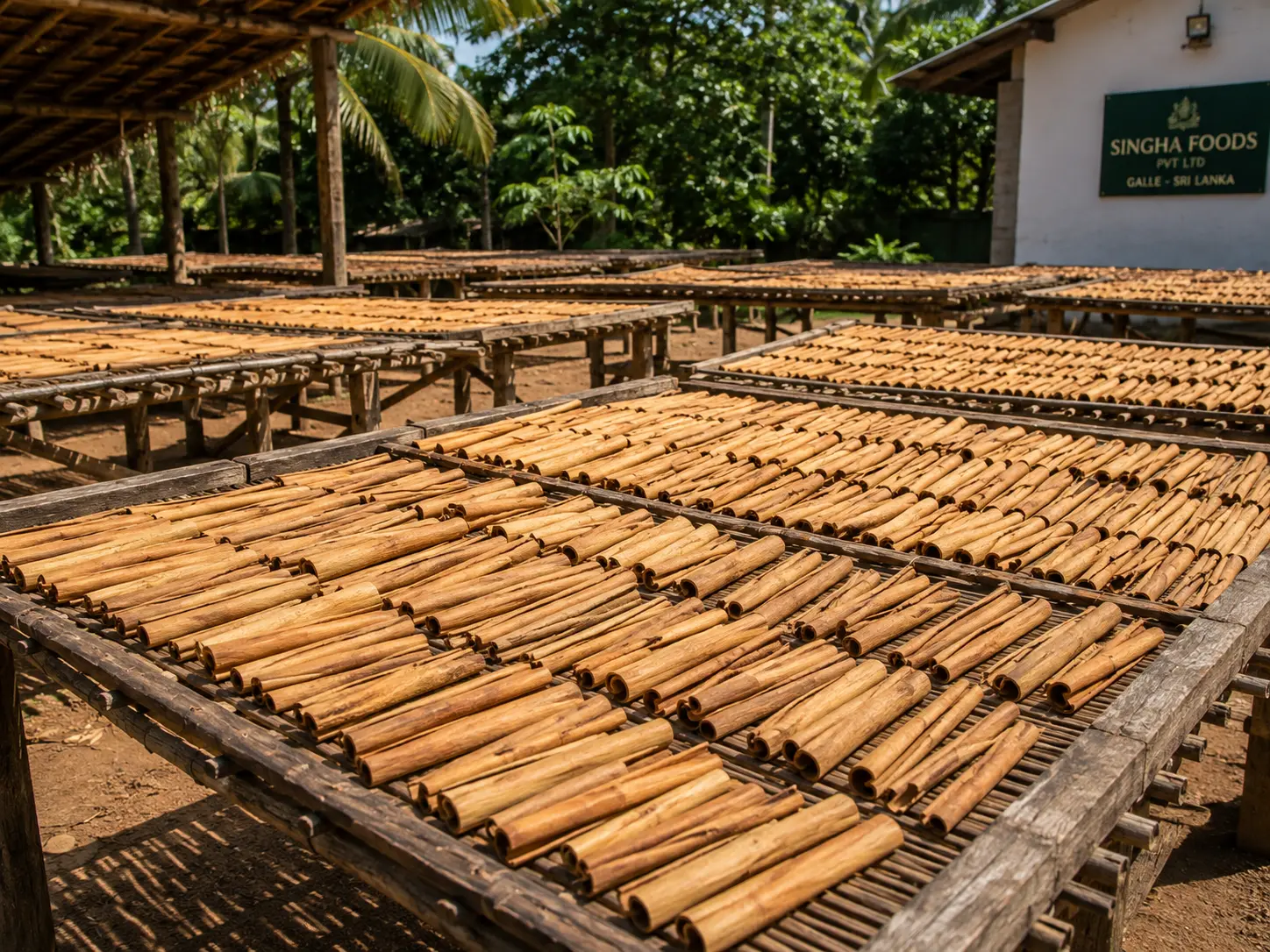
Cinnamon quills drying on open racks

Drying

Shade first, then sun.

Rolled quills rest in shade for a day so they contract evenly, then move to raised racks in the sun. They are turned by hand and rolled tighter as they shrink, over several days depending on the weather.

Nothing is kiln forced and nothing is treated. Sun drying alone, with no additives, is what keeps the pale colour and the sweet, floral top notes intact.

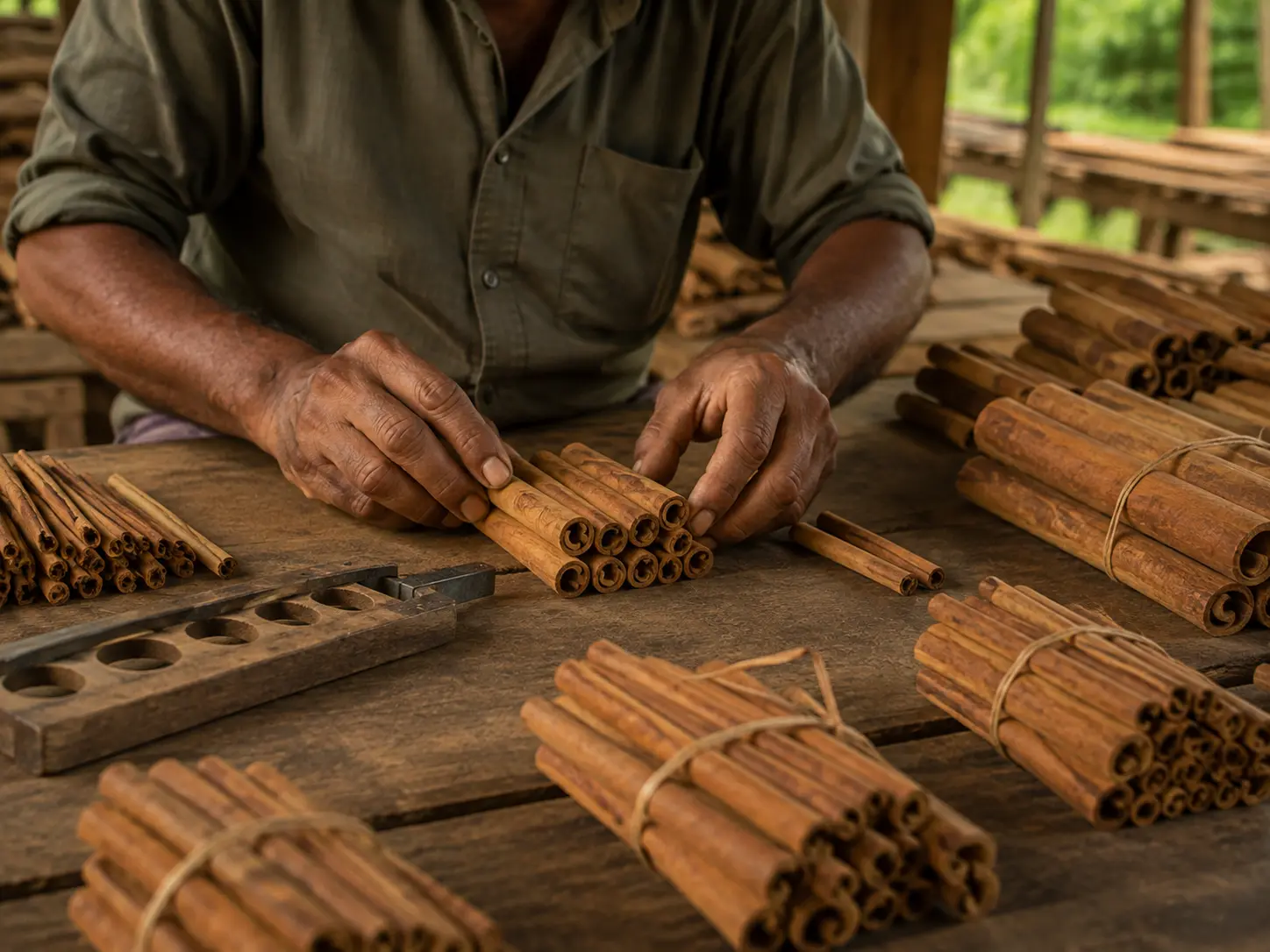
Hands sorting and bundling cinnamon quills by size

Grading

Sorted by the quill, not by the season.

Dried quills are cut to length and sorted by diameter, gauge in hand. Thinner bark means a sweeter, more delicate spice and a higher grade. Thicker bark means a fuller, woodier one built for long cooking.

Broken pieces become quillings rather than being blended into whole quill grades, and scrapings go for oil distillation. Nothing is wasted, and nothing is upgraded.

Quality checks

What every lot is checked for.

  • Purity and authenticity

    Every lot is confirmed as Cinnamomum verum and kept separate from cassia at every stage of handling, from the drying rack to the pouch.

  • Moisture content and freshness

    Bark is dried to a stable moisture level before it is cut and packed. Under dried stock spots and clumps. Over dried stock splits and loses aroma.

  • Flavour profile and aroma intensity

    Lots are smelled and tasted before they are approved. A quill that has lost its top notes is downgraded rather than blended into a higher grade.

  • Absence of contaminants

    Stock is cleaned and inspected for foreign matter, damaged bark and mould before grading, and packed in a controlled area.