Guides
Reading a cinnamon grade, what Alba, C5, C4 and H1 actually mean
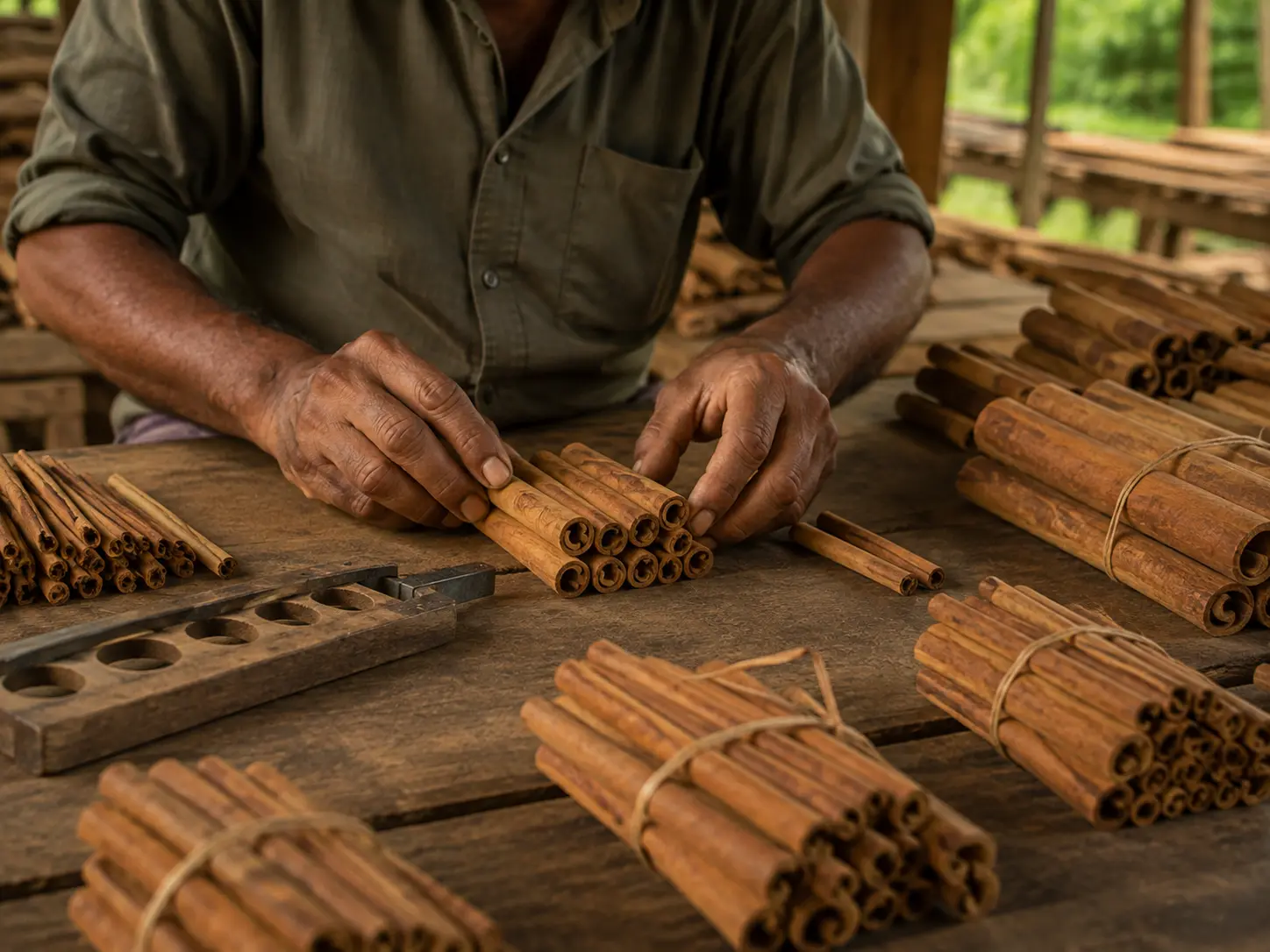
The first time a buyer sees a Ceylon cinnamon price list, it reads like a parts catalogue. Alba, C5 Special, C5, C4, M5, H1, H2. There is no vintage, no estate name, no tasting score. The system looks opaque, but it rests on a single physical measurement: the diameter of the finished quill.
Why diameter is the grade
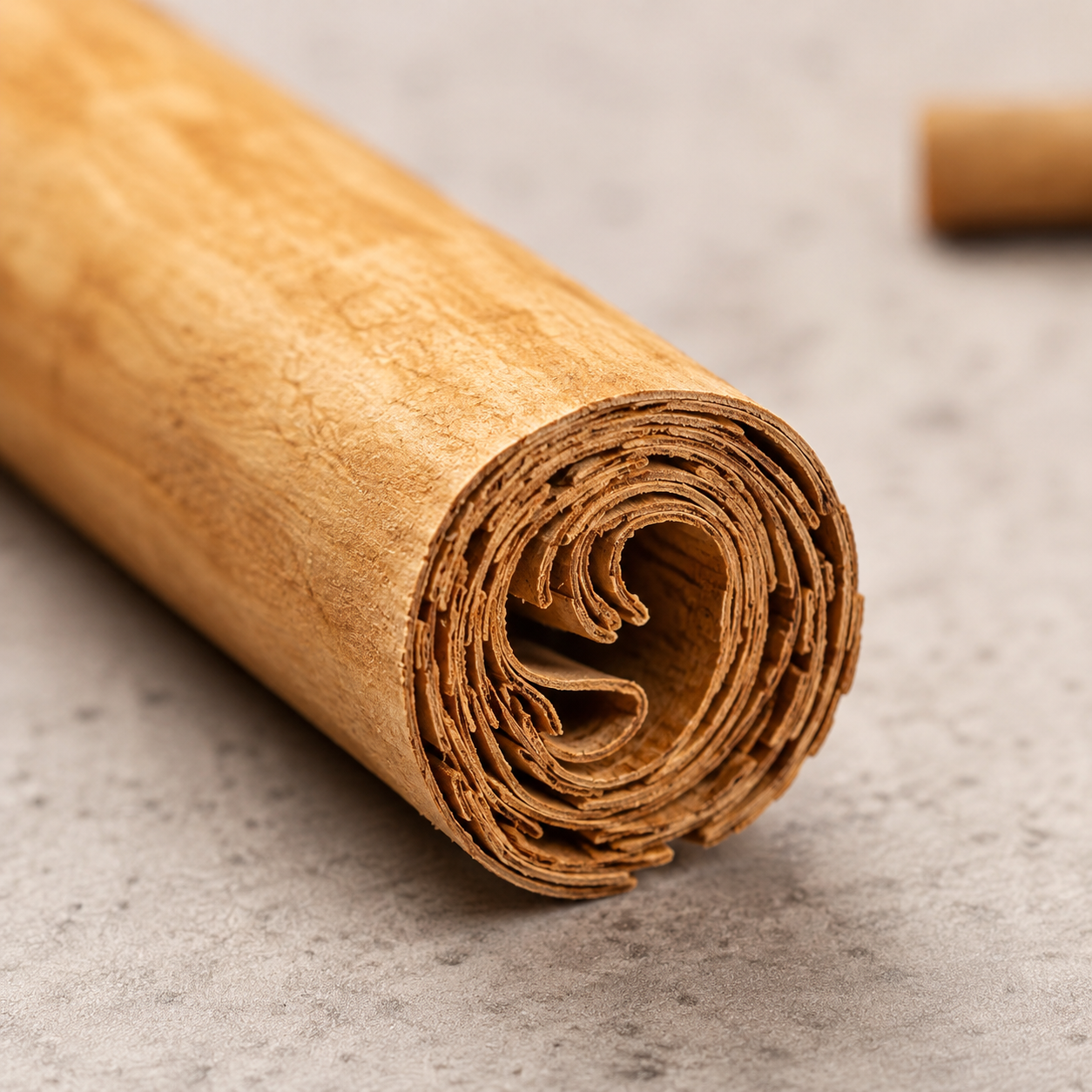
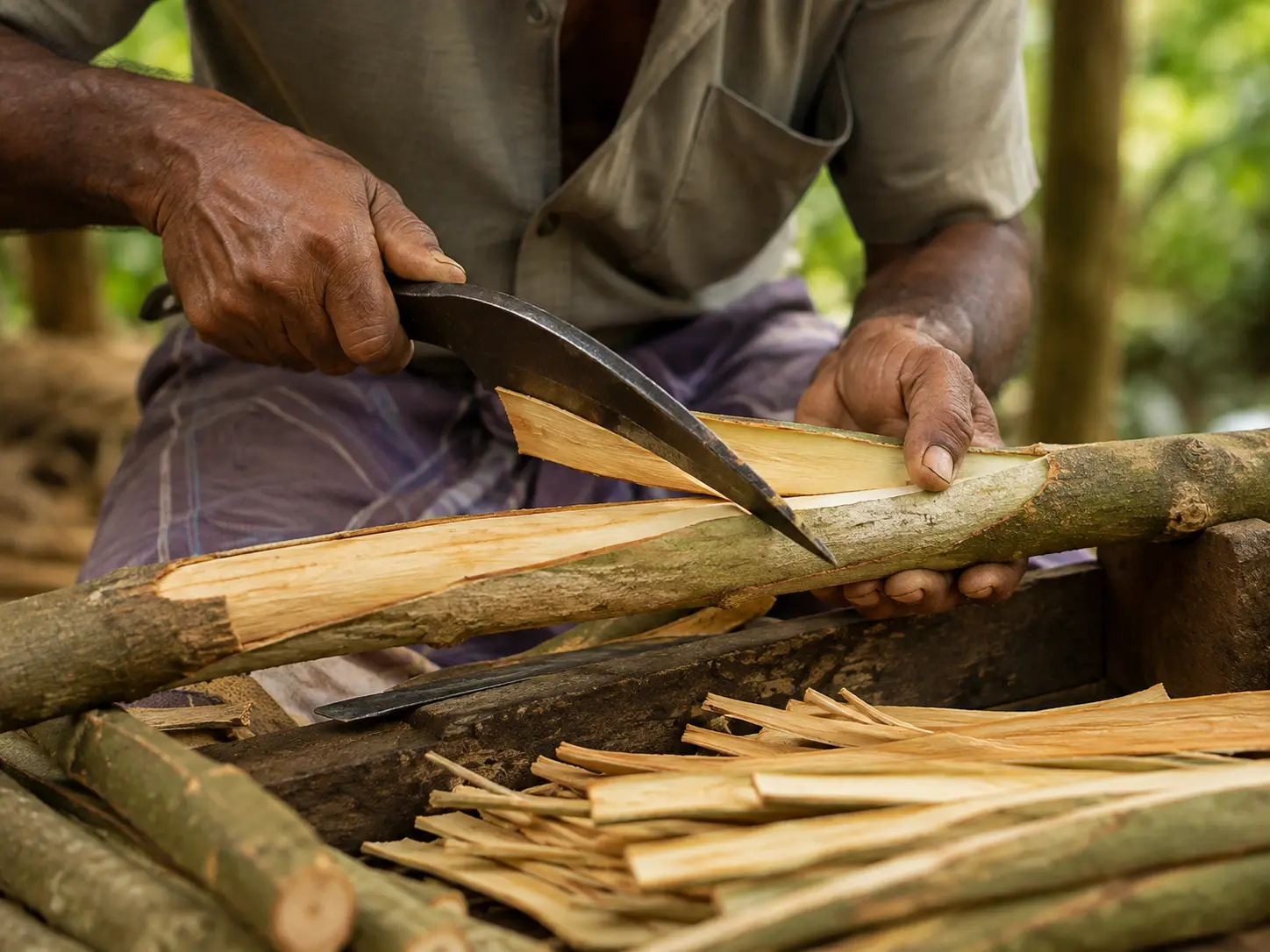
A cinnamon peeler works the inner bark of a young shoot. The thinner and more even the strip they lift, the tighter the finished quill rolls, and the smaller its diameter. Thin bark comes from young, well grown shoots handled by a skilled peeler, and it carries more of the sweet, floral character people buy Ceylon cinnamon for. Thicker bark comes from older or coarser wood. It is more robust, more woody, and it holds up better to long cooking.
So diameter is a proxy for three things at once: the raw material, the skill of the peeler, and the flavour profile you will get in the pot. That is why the trade settled on it.
The four grades we carry
- Alba, up to 6 mm. The finest and sweetest. Pale, papery, almost weightless. Best where the cinnamon is the point: rice puddings, custards, tea, delicate pastry.
- C5 Special, up to 13 mm. The everyday premium quill and the one most kitchens should own. Enough perfume for baking, enough body for a curry.
- C4, up to 16 mm. Fuller bodied, built for cooking. Good in stocks, braises and spice blends where it shares the plate.
- H1, up to 19 mm. Robust and woody. For long simmering, stock, mulled drinks and anything that cooks for an hour or more.
What the letters mean
C stands for Continental, the historic export designation for quills cut to a standard length for the European trade. H stands for Hamburg, a heavier, coarser specification named for the port it was shipped to. M stands for Mexican, traditionally the market for a particular thickness. Alba is simply the Latin for white, describing the pale colour of the very thinnest bark. The numbers refer to how many quills of that grade make up a kilogram bundle in the traditional bale, which is why a lower number means a thicker, heavier quill.
A grade code is a measurement, not a compliment. H1 is not failed Alba. It is the right bark for a pot that will sit on the heat for two hours.
How to choose without overthinking it
If you drink cinnamon tea or bake often, buy Alba and taste what the fuss is about. If you want one grade in the cupboard for everything, buy C5 Special. If you cook Sri Lankan, Indian or Middle Eastern food in volume and the stick goes in whole at the start, C4 or H1 will serve you better and cost less per gram.
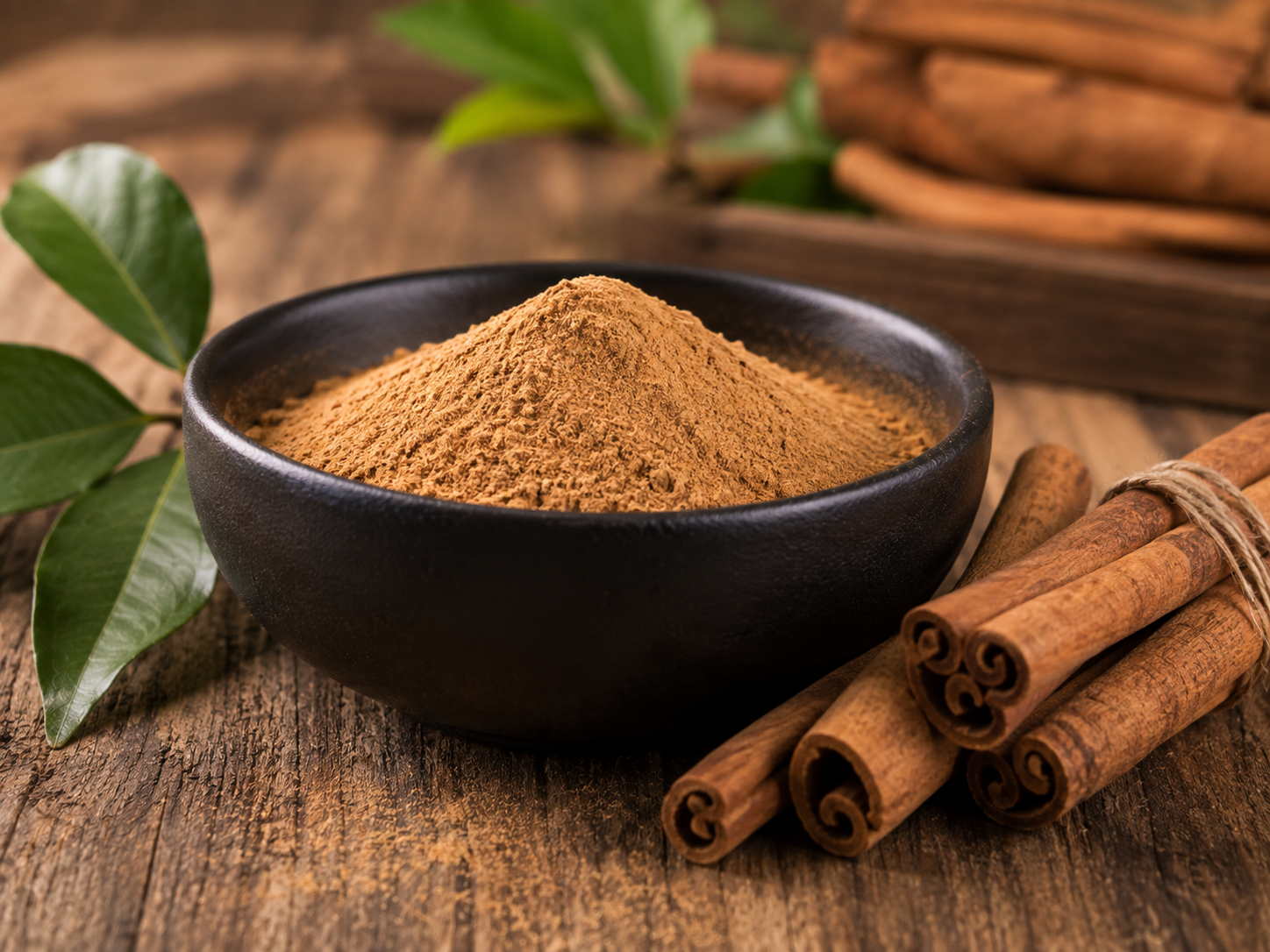
Ground cinnamon sits outside the diameter system entirely, because once the bark is milled the measurement is gone. What matters then is what went into the mill. We grind from the same graded quills we sell whole, which is not universal practice in the industry.
Reading a specification sheet
On an export document you will see the grade code alongside quill length, moisture content, and whether the lot is whole quills, quillings, featherings or chips. Quillings are broken pieces of quill, perfectly good and considerably cheaper, and they are what most commercial grinders use. Featherings and chips come from the inner bark of twigs and from scraping, and they are largely destined for oil distillation. None of this is a quality judgement. It is a description of what is physically in the bale.
Learn the diameter scale and the rest of the sheet stops being intimidating. You are reading a measurement, and it tells you exactly how the spice will behave in your kitchen.